Evinrude Service Bulletin #1134
The June 1976 Evinrude Fuel System Bulletin 1134 describes a choke linkage modification and warm-up adjustment to improve cold-weather starting on 1976 200 HP outboards.

Fuel System #1134
June, 1976
HARD STARTING IN COLD WEATHER ON 1976 200 HP MODEL
We have received reports of 200 H.P. engines being difficult to start in cold weather. Our testing has shown that the problem can be corrected by making the following changes.
1. Remove the air silencer cover and base from engine.
2. Remove and discard the choke unloader link P/N321172 and its nylon retainers from upper carburetor. See Figure 1. (Removing this link was a running change in production, so it may not be found on engine.)
3. Remove choke linkage from starboard side of carburetors.
4. Remove and discard the center link and loosely reassemble the upper link to lower link. See Figure 2.
5. Install linkage assembly into upper and middle carburetors’ nylon retainers. See Figure 3.
6. With upper and middle carburetor choke plates fully closed, center the clamp on linkage rods so approximately 1/8” of each rod extends beyond the clamp. Tighten clamp screw.
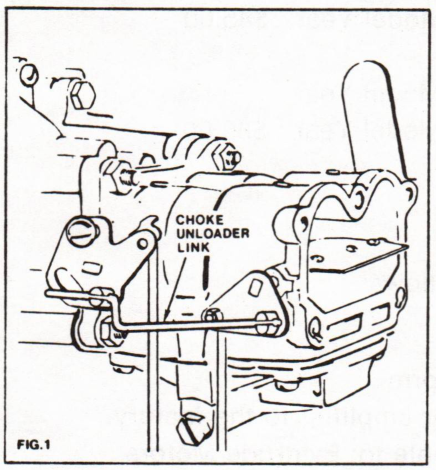
Figure 1
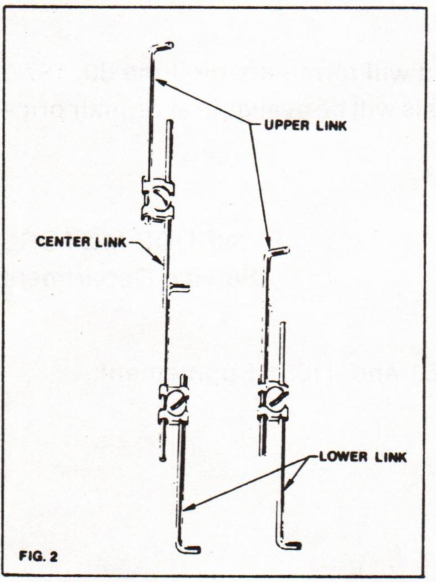
Figure 2
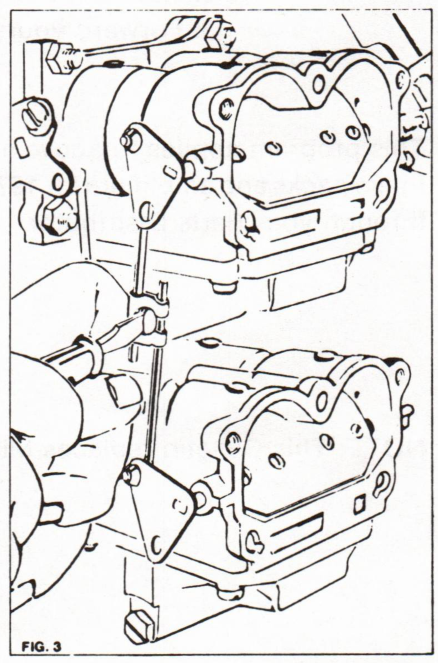
Figure 3
Fuel System #1134
7. To insure that lower carburetor choke is completely inoperative, attach a P/N378984 arm assembly to choke shaft. See Figure 4.
8. Reinstall air silencer base making sure arm assembly is against the base and choke valve is in the “open” position.
9. With the manual choke override switch (on the control box) in the “on” position, choke valves will look as shown if modification has been done correctly. See Figure 5.
10. Reinstall air silencer cover.
11. With engine running (in lake or test tank), control box shift lever in neutral and the warm-up lever in the “start” position, readjust the warm-up adjusting screw in control box until tachometer reads between 4500 and 5000 R.P.M. See Figure 6.
12. A check of the throttle cam will show that the pick-up point has been advanced approximately 1/8”. Make a new mark on the throttle cam at this point. See Figure 7.
NOTE: By advancing the spark, the engine speed after starting is also increased. This may be in excess of 5500 R.P.M. on a hot engine. If this does occur, advise the customer that he should not fully engage the warm-up lever when engine is hot. (Air temperature 50°F or higher or when engine has been run within 3 hours.)
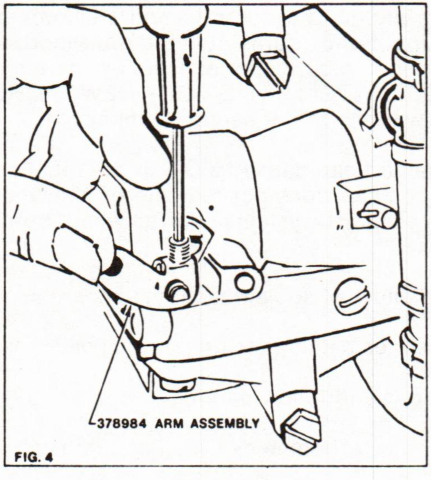
Figure 4
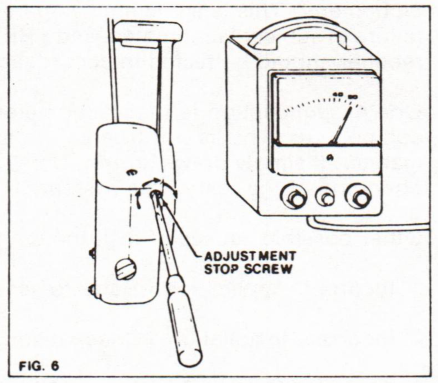
Figure 6
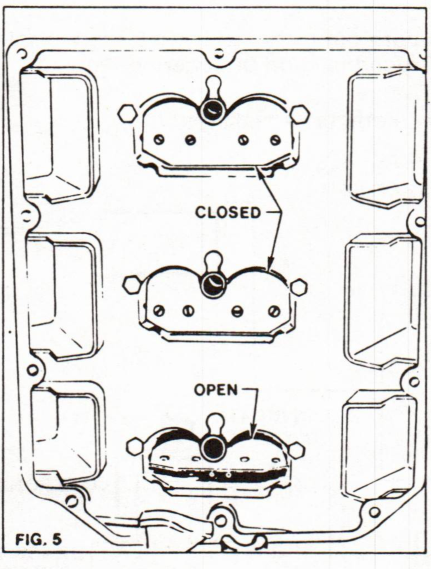
Figure 5
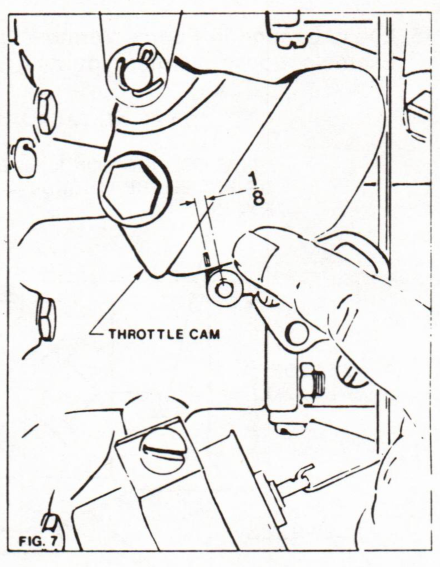
Figure 7