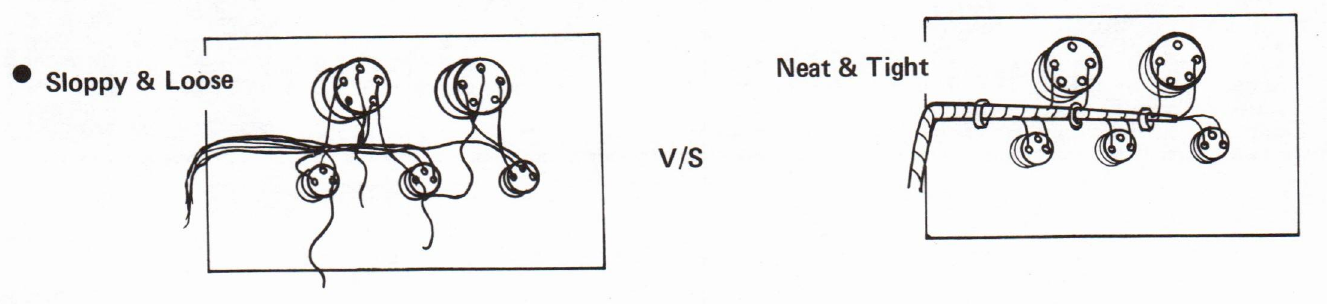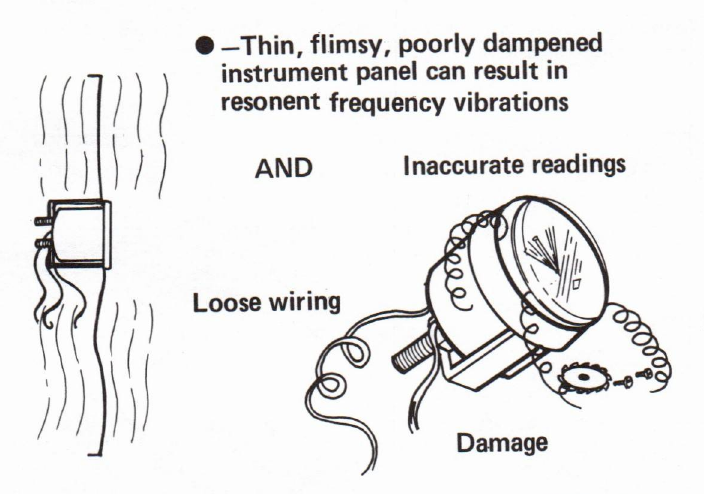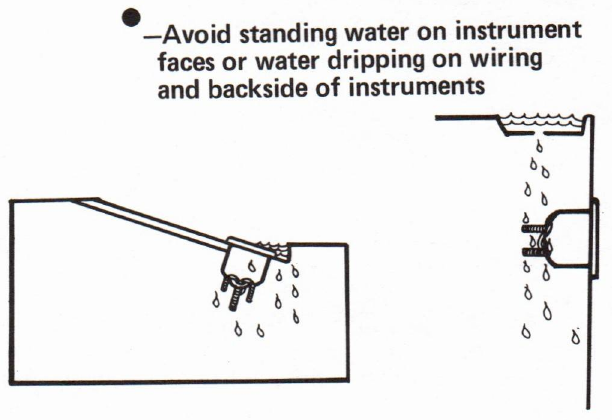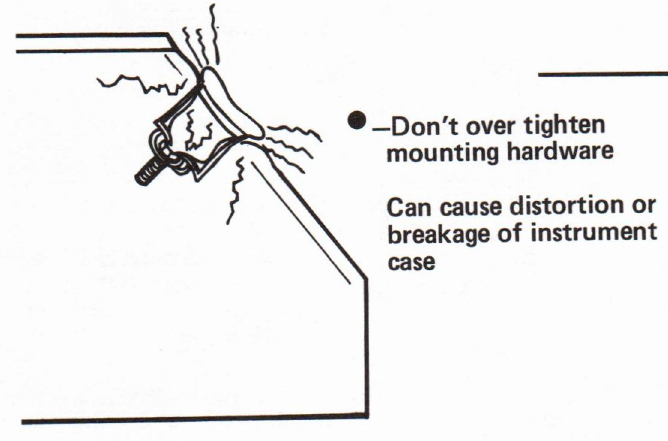
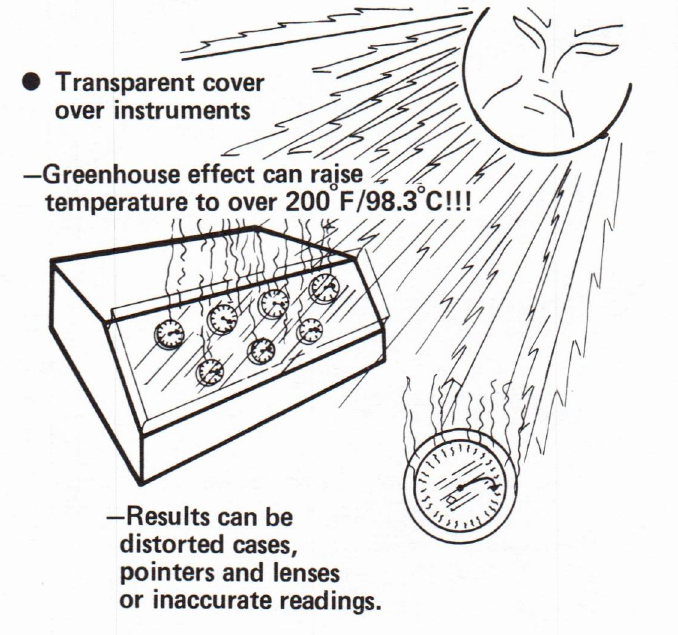
Boat builders generally provide a panel located near the helm for mounting instruments. These panels may be recessed or covered by clear plastic to protect the instruments.
Many instrument manufacturers use plastic extensively in gauges and indicators. Plastic is non-corrosive which makes it very attractive for use in marine products. However, heat can cause some types of plastics to deform. Instruments can become inaccurate and could be damaged by exposing them to high temperature conditions.
If the instrument panel is not ventilated adequately, sunlight can cause the temperature under the panel surface to rise to over 200°F (98.3°C). To adequately ventilate the instrument area, it may be necessary to modify or remove the transparent cover.
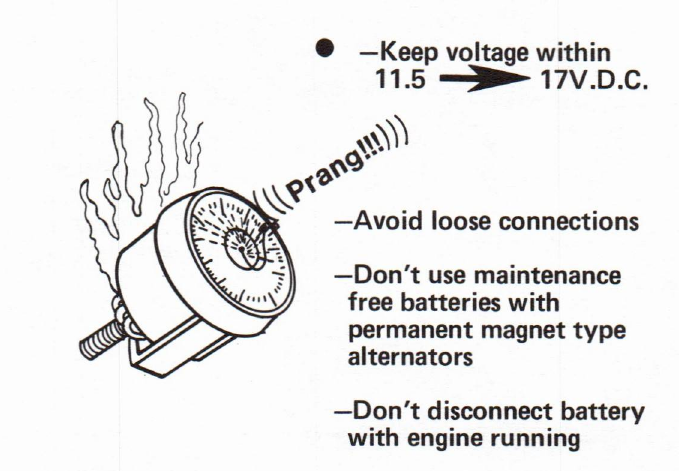
Instrument operation can also be affected by other things. To ensure accuracy and long life:
1. Avoid high voltage surges in the boat electrical system by making tight, clean connections. Do not use maintenance free batteries with engines equipped with permanent magnet alternators. Do not disconnect the battery while the engine is running.
(Continued)